
Literature design system
From a text file to a print-ready brochure.
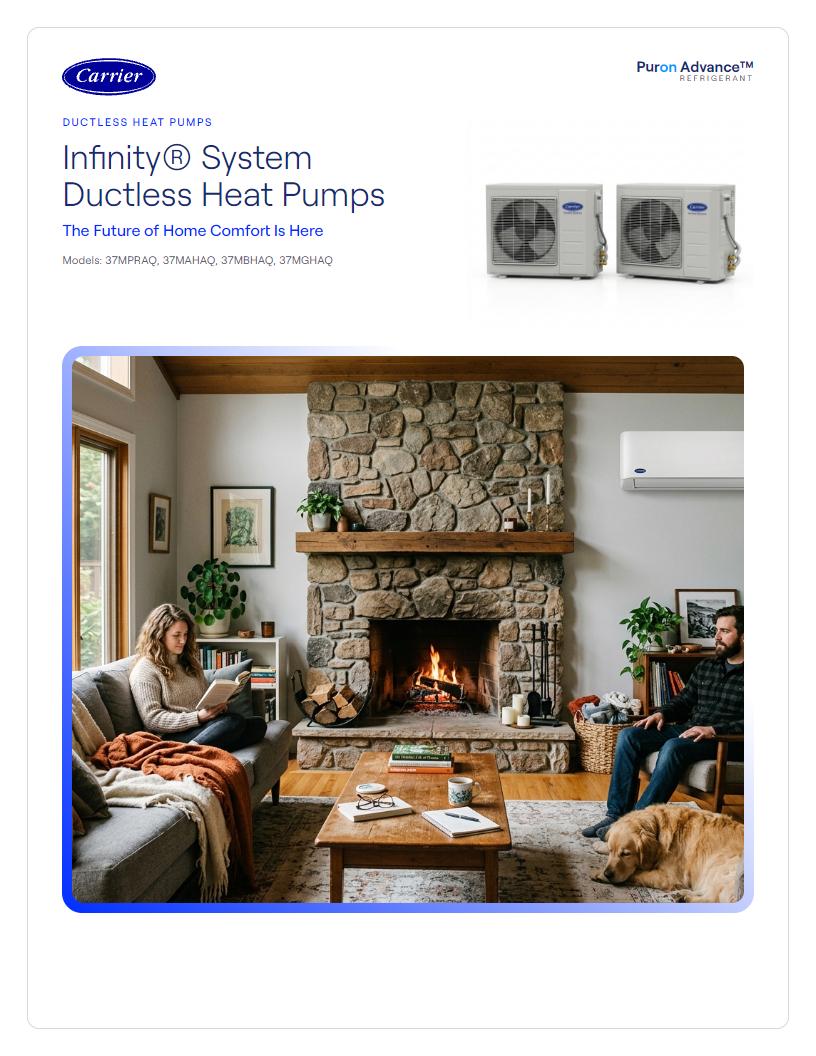
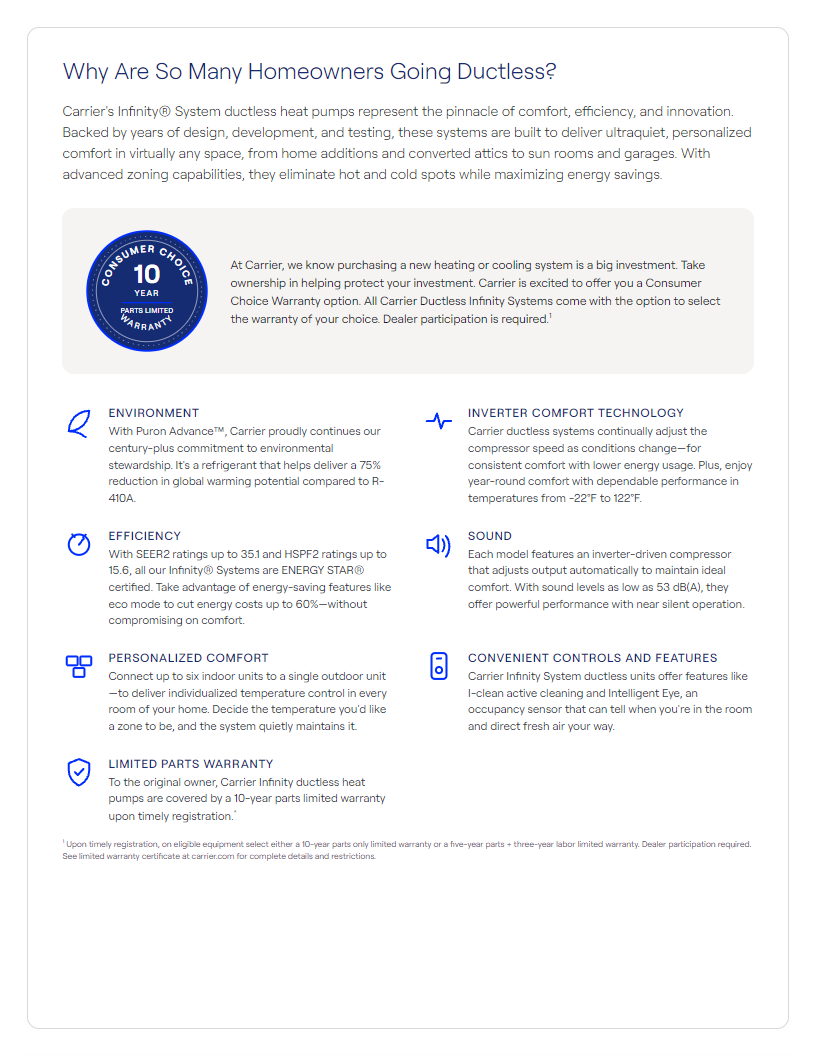
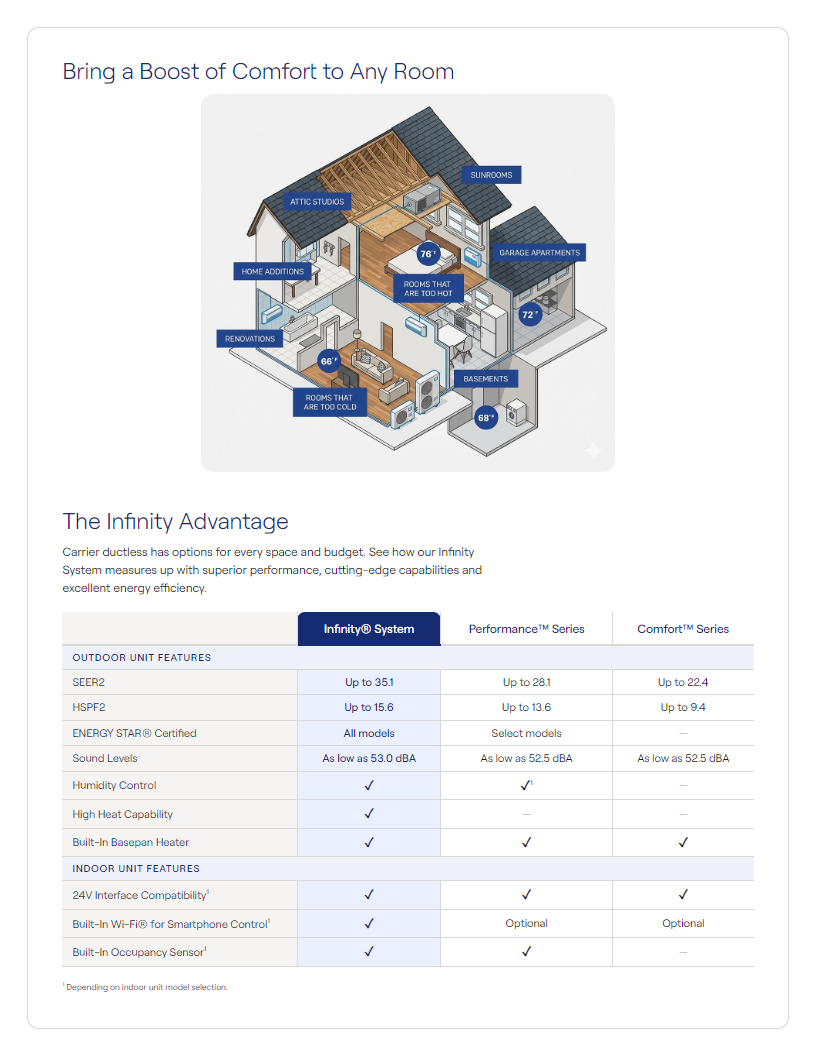
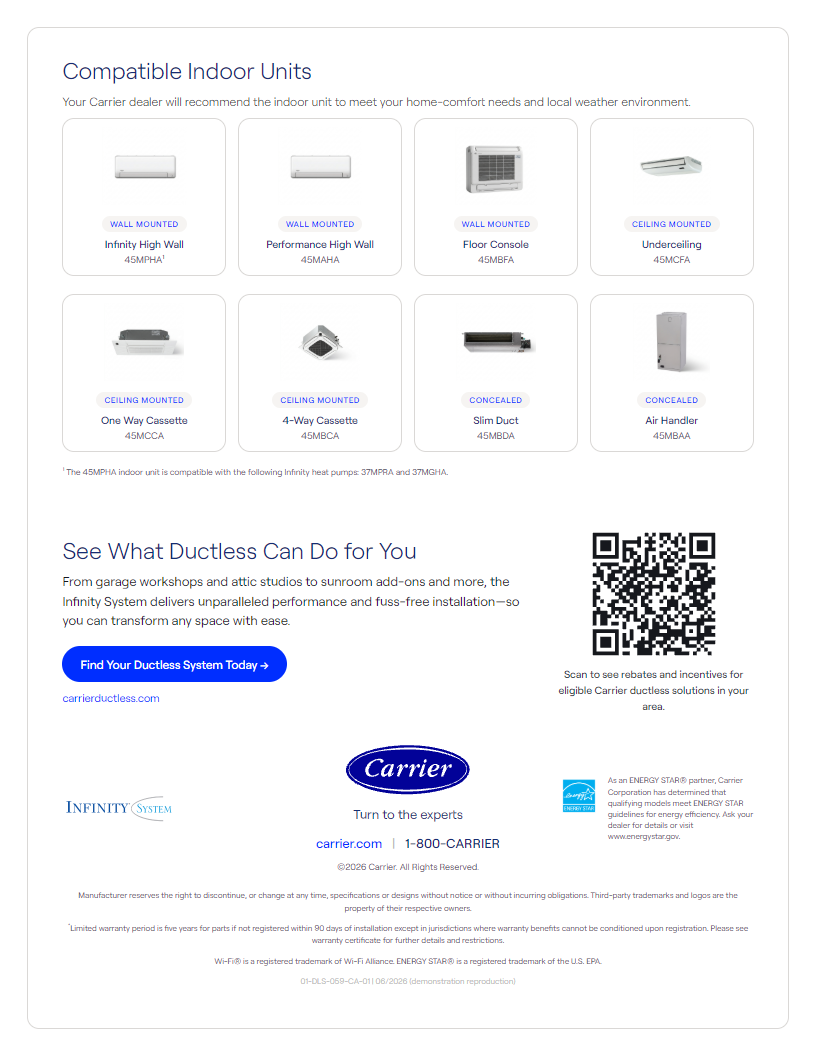
This brochure was not laid out by hand. It was generated from a short configuration file by a system of on-brand components, rendered to HTML, then to a crop-safe PDF. Producing a new piece is a content edit measured in minutes, not a creative-services ticket measured in weeks.
The output
An equivalent of Carrier’s flagship ductless consumer brochure
(01-DLS-059-CA-01), reproduced from the component system. Four pages, on-brand
by construction.
How it gets fast
The author only ever touches content + configuration. The renderer owns the pixels, so the output is on-brand no matter what is written. This is the config that produced the brochure above — edit a line, rebuild, and the design follows:
components:
  - hero:
      eyebrow: Ductless Heat Pumps
      headline: Infinity® System Ductless Heat Pumps
      subhead: The Future of Home Comfort Is Here
      image: { file: hero-lifestyle }
  - benefitBullets:
      heading: Why Are So Many Homeowners Going Ductless?
      items: [ environment, inverter, efficiency, sound, ... ]
  - comparisonTable:
      heading: The Infinity Advantage
      tiers: [ Infinity® System, Performance™ Series, Comfort™ Series ]
      highlight: Infinity® System
  - rebateQR: { url: https://carrier.com/rebates }
  - footer:
      logos: [ carrier, infinity-system, energy-star ]
Want the architecture behind it — AI, brand voice, component library, and product specs feeding the renderer? See How I Built This.